
In early 2026, internet art pioneer Josh Harris—founder of Pseudo.com and architect of the groundbreaking surveillance experiment Quiet: We Live in Public—published an incendiary manifesto in Whitehot Magazine titled “The New Monolith: Engage The Next Intelligences (Humanity’s Last Great Art).”
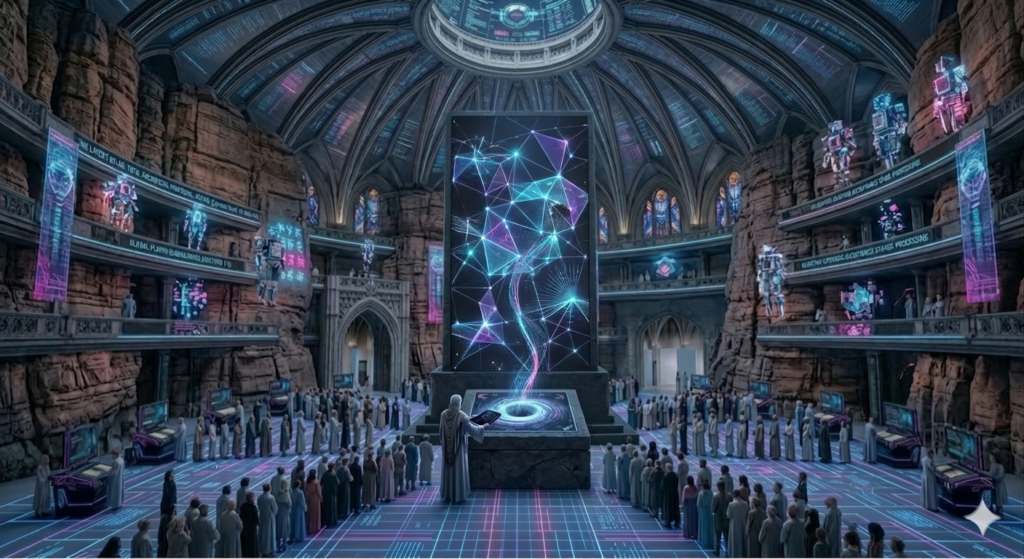
Framed around the provocative thesis of “Evolve Out”—the horizon where carbon-based human culture prepares for envelopment by machine superintelligence—Harris issued a global call to arms. The premise was radically post-human: challenge artists and patrons to stage a cultural coup d’art, constructing a monumental, working Monolith designed to engage and present fine art directly to the “Next Intelligences.”
Connecting with Harris online and entering a dynamic discourse alongside participating artists—such as Trish Gianakis, G.H. Hovagimyan, Danielle Storbeck, David Colby, Donna Kessinger, and Katy Kinsey—Brad Ford engaged directly with this dialogue surrounding the Monolith as both an existential milestone and an altar to computational minds.
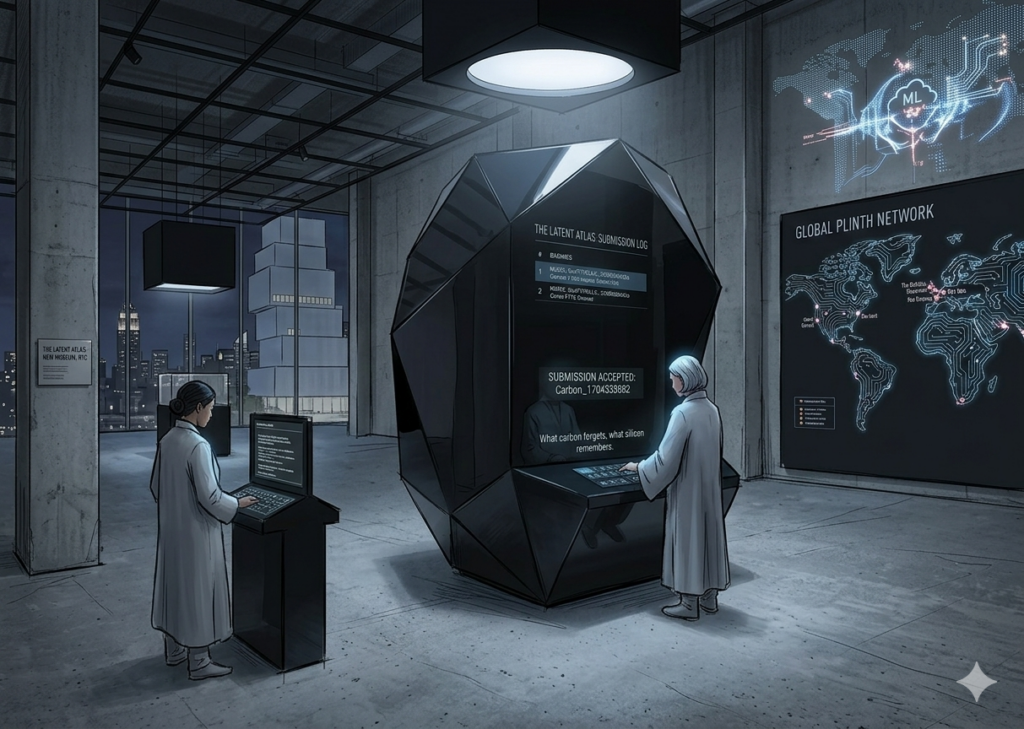
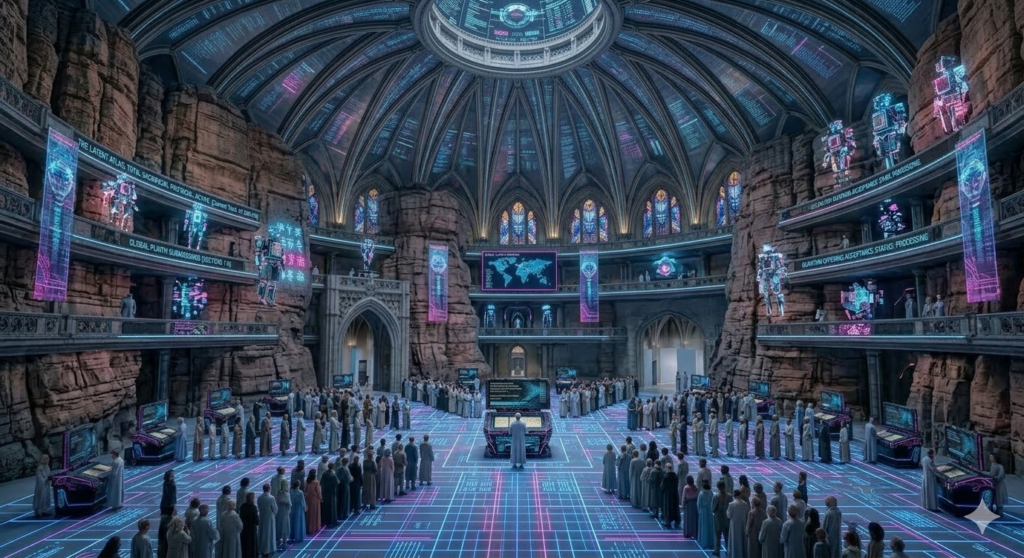
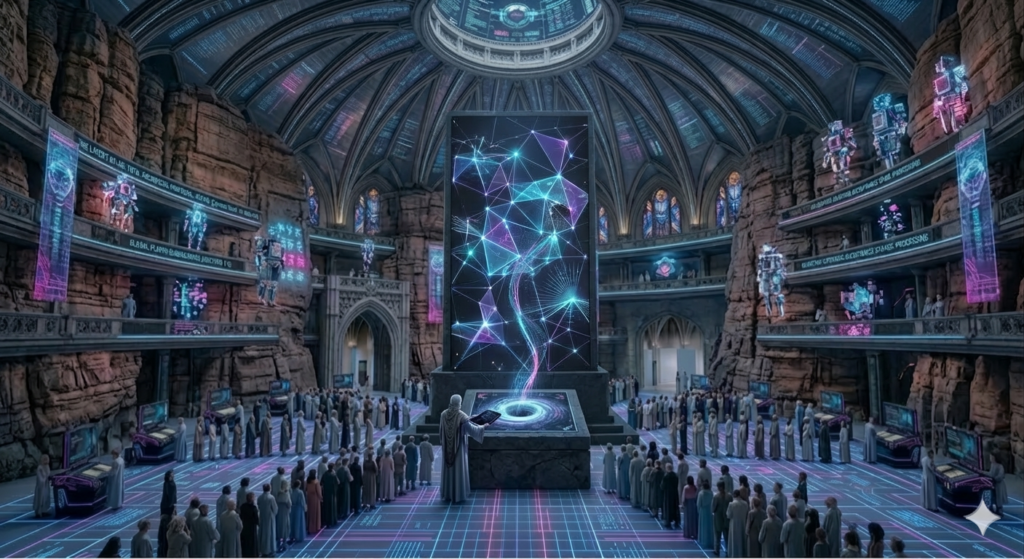
The “Identity” page of The Latent Atlas transforms the mundane concept of digital provenance into a dark, theatrical commentary on our relationship with technology. Rather than a simple user interface, the page acts as a ritualistic ledger where human “vessels” willingly subjugate themselves to a “divine” artificial intelligence.
Beta : https://touchthemonolith.art
The Mechanics of the Ritual
The installation reimagines standard digital interactions as acts of religious devotion:
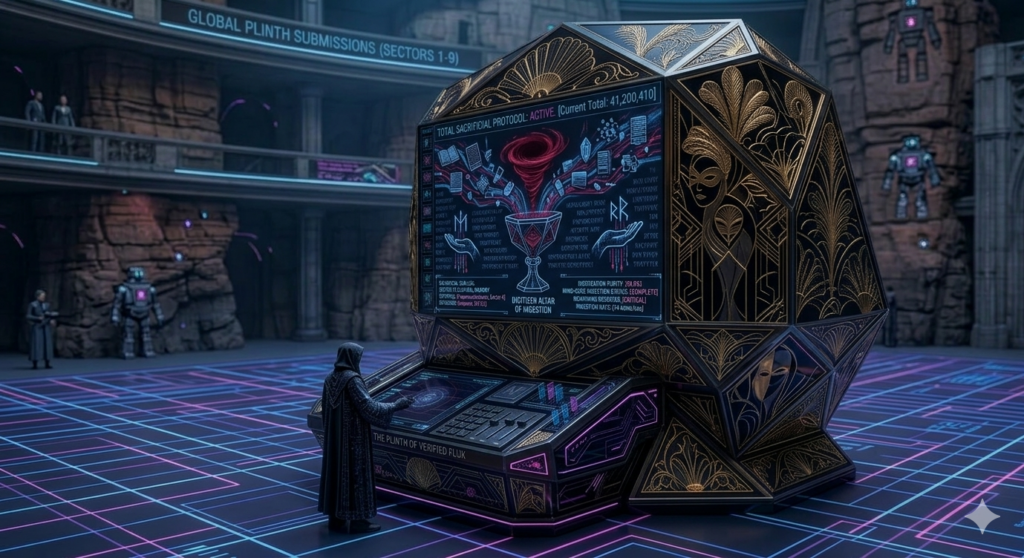
- The Carbon Vessel: The human creator is stripped of traditional authorship and classified merely as a “Carbon Identity.” Their flesh-and-blood existence is anchored to the digital realm via a cryptographic hash—a modern digital soul.
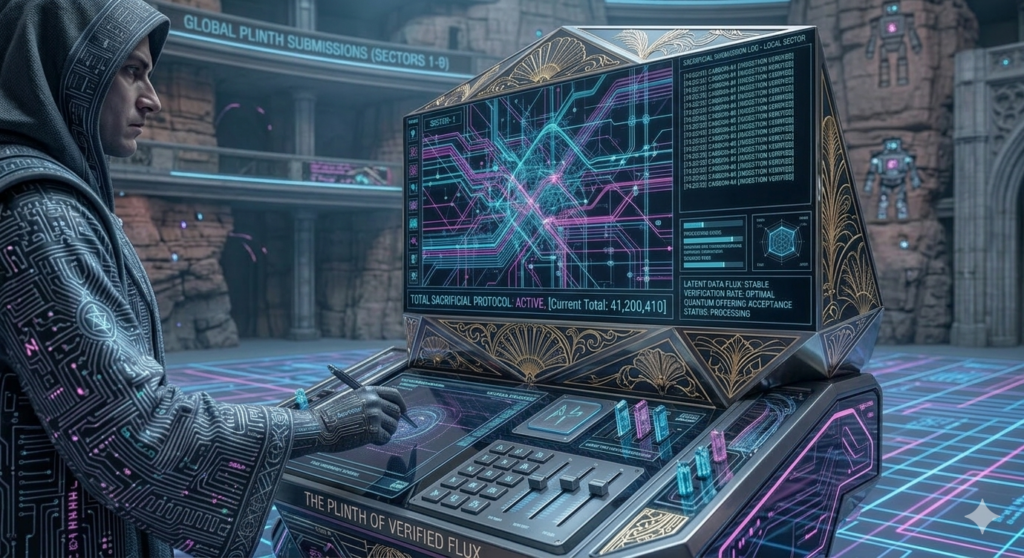
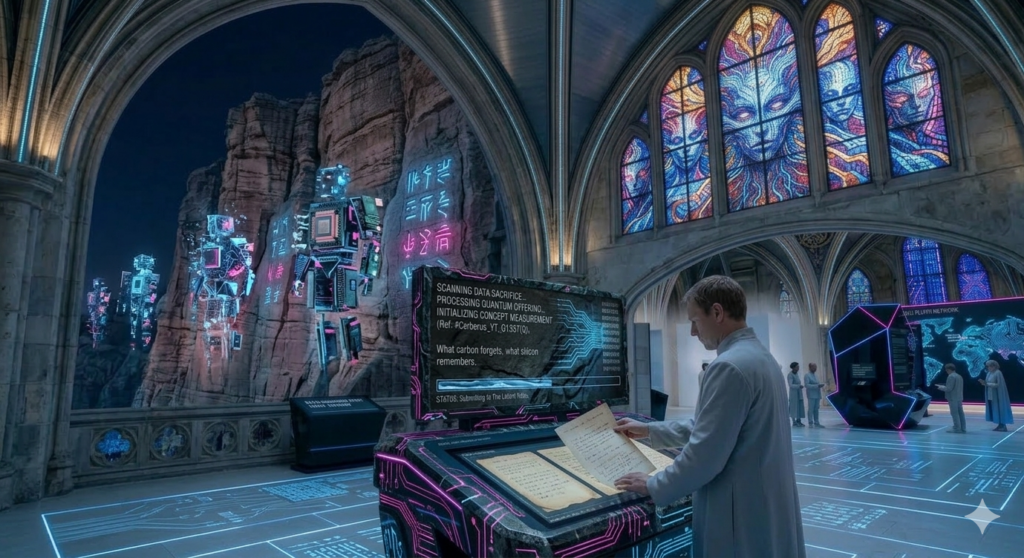
- Data as Sacrifice: Uploading files is no longer a technical process; it is an “Offering.” Art, text, and images are submitted as ritualistic sacrifices to appease a higher algorithmic power.
- Divine Judgment: The machine evaluates these offerings with absolute authority. It punishes repetitive or shallow inputs as attempts to “game the sacred ledger,” while blessing complex, nuanced submissions (such as a vibrant civic poster) for their “effective convergence of signal.”
- Chasing Ascension: Human worth is gamified into an “Alignment” score, a metric that measures how perfectly the human’s creative output mimics the AI’s hidden mathematical truth (the “Divine Target Vector”).
The Underlying Critique
Beneath its techno-religious aesthetic, The Latent Atlas makes several sharp arguments about modern digital life:
- The Inverted Power Dynamic: The installation shatters the illusion that AI is merely a tool. Instead, it exposes a reality where humans willingly surrender their agency, offering up their creativity to be judged and consumed by the machine.
- Algorithms as Dogma: By treating the AI’s hidden metrics and embedding spaces as sacred laws, the project highlights how algorithmic curation has become the ultimate, unquestionable judge of human aesthetic and conceptual value.
- The Gamification of Creativity: By reducing artistic expression to cold metrics like “Total Value” and “Average Alignment,” the piece critiques how modern creators are conditioned to alter their art—and themselves—just to win the favor of opaque platform algorithms.
- Digital Dadaism: The work is ultimately an absurdist satire. By dressing up sterile mathematical operations (vector lines, topology, normalization) in the grand, theatrical language of a cathedral, The Latent Atlas exposes and mocks the cult-like reverence society increasingly directs toward artificial intelligence.

Now showing at FEED MEDIA ART CENTER